Imagine a film industry that could only show you the movies it currently found commercially convenient, then described the rest as a problem for collectors.
That would be a terrible way to understand cinema. It is also a useful way to think about what gets lost when the availability of games depends entirely on whether somebody wants to sell them again.
The hits are only part of the history. So are the failures, the strange experiments, the unfashionable genres and the ordinary releases that show what the medium looked like between its monuments.
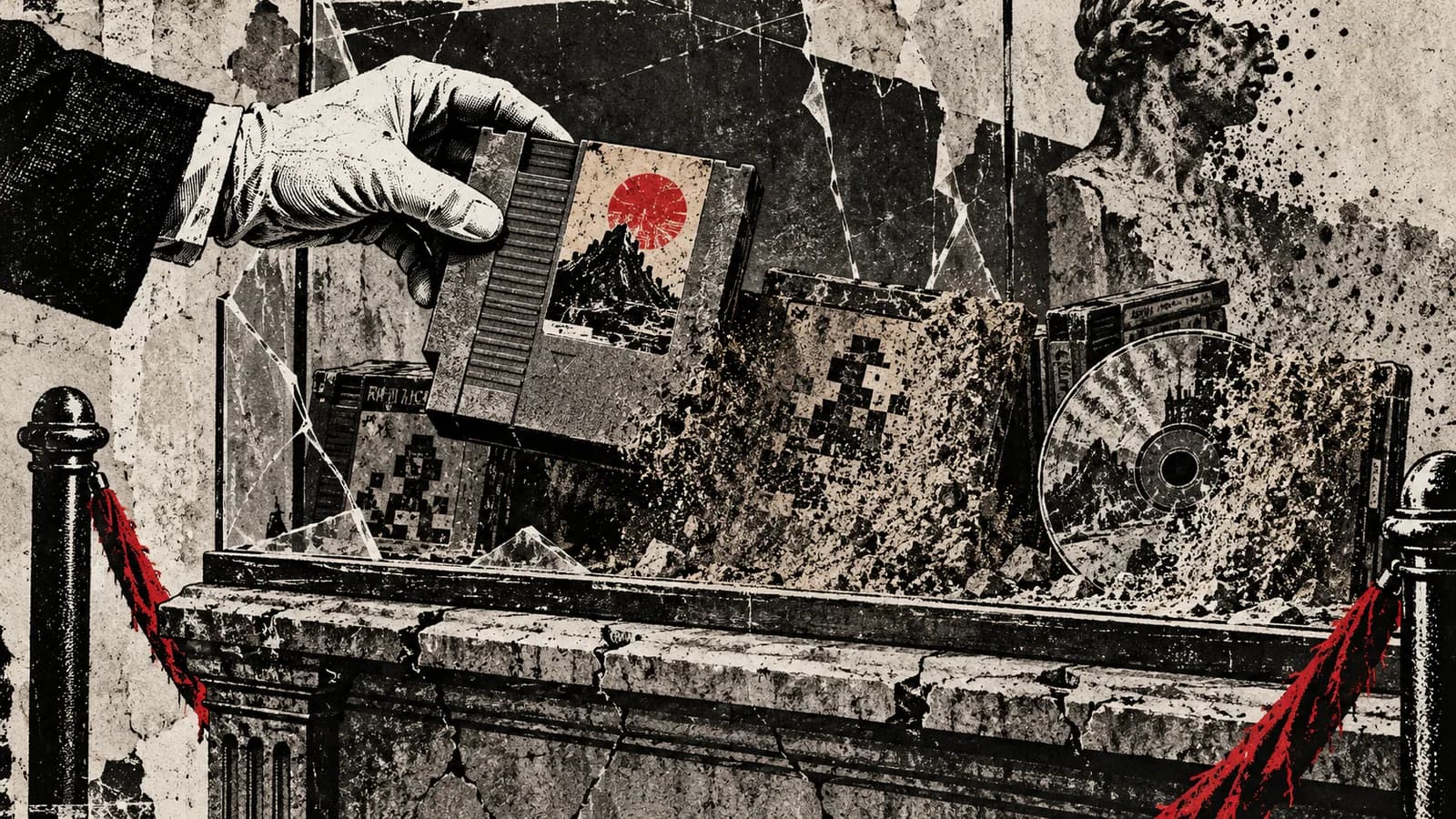
A market is not an archive
In a study published in 2023, the Video Game History Foundation and Software Preservation Network examined the commercial availability of historical games released in the United States. Their sample covered 1960–2009; only about 13 percent were available commercially. That is a scoped historical study, not a current claim that 87 percent of every game in the world has disappeared. [1]
The distinction does not make the finding comforting.
Commercial reissue is selective by design. A publisher deciding what to release again has to consider costs, rights, demand and practical constraints. An archive has a different purpose: keeping a record even when the record is not an attractive product.
Expecting the first activity to perform the second leaves history at the mercy of a revenue forecast.
The awkward games matter too
An unsuccessful game can reveal what its creators were trying to solve. An interface that now feels clumsy can show a design convention before it settled. A forgotten licensed game can say something about the relationship between games and the rest of popular culture.
You do not have to enjoy every surviving work to learn from it. Libraries are not required to defend every book as a great afternoon.
If we preserve only the things that remain easy to market, we eventually mistake the surviving selection for the whole past. That is a very tidy history, and a very misleading one.
Access is part of preservation
Keeping a file and making a work meaningfully accessible are related but different tasks. A game depends on behavior, controls and a functioning environment. A screenshot can document its appearance without preserving the experience of using it.
I am not pretending those problems have a single easy technical or legal answer. I am arguing that they deserve attention before the last convenient commercial reason to solve them disappears.
Support the people doing the archival work. Keep the documentation. Take the unglamorous parts seriously. The future researcher trying to understand a game may need the manual, the patch history and the context as much as the box art.
History should not require a profitable remake
A remake can be excellent and still be a new interpretation. It should not have to carry the impossible responsibility of replacing the original as a historical object.
We need room for both: the new work and the evidence of what came before.
A medium that wants to be treated as culture has to care about its memory, including the parts that cannot justify a collector’s edition.
Sources & further reading
Twenty years in marketing and design, across industries. Still paying attention. Considerably less patient.
More about me ↗