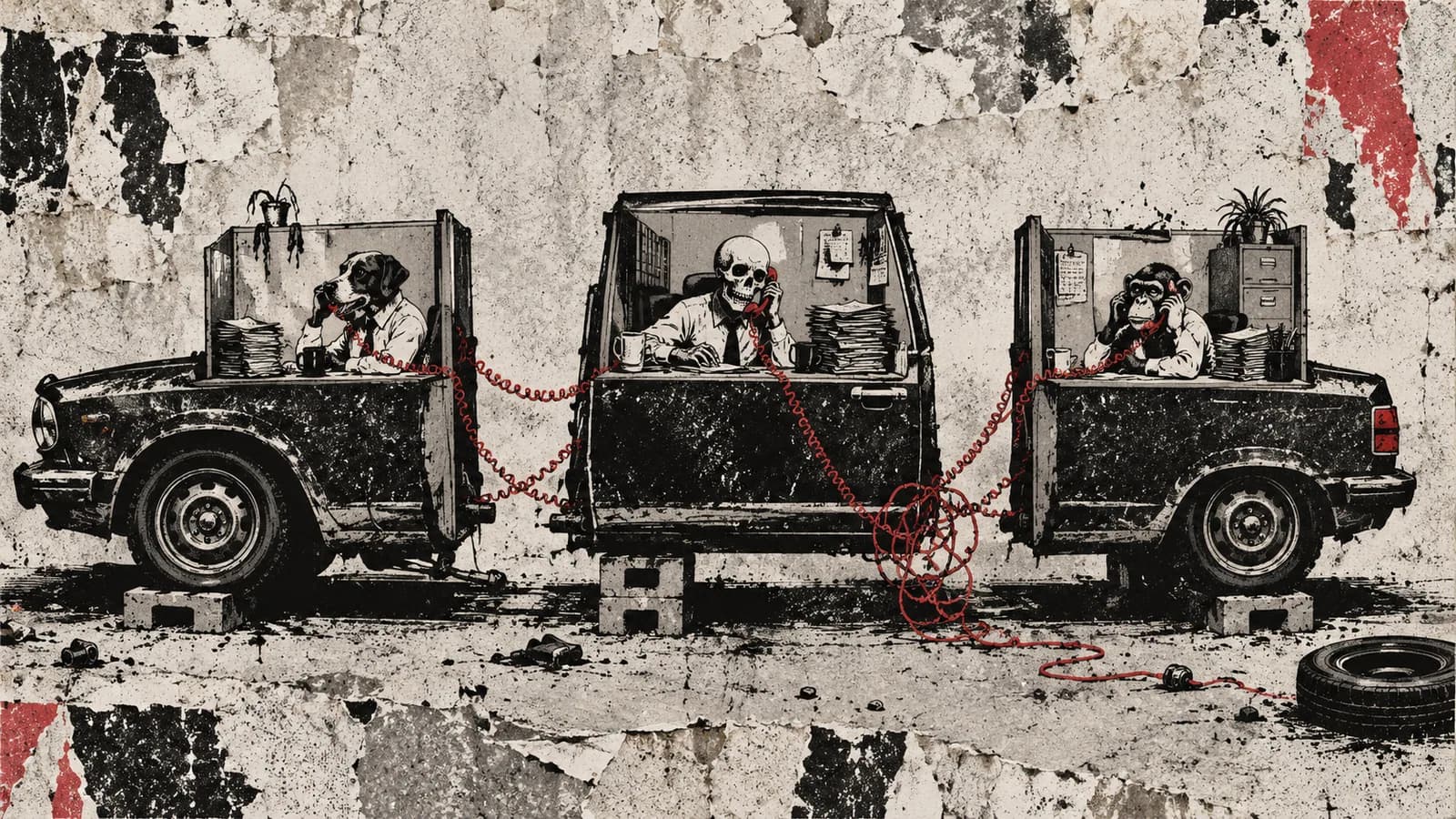
Your customer did not split into three people when they moved from buying a car to servicing it to considering another one. Your departments did that for them.
One human can become a fresh lead, an existing owner and a lost opportunity inside the same business, depending on which screen someone opens. Then marketing gets asked to create a seamless customer journey. Apparently the seams are its fault.
This is the sort of problem that makes a beautiful presentation feel like an elaborate practical joke.
The human remembers the whole story
Imagine an owner with an unresolved service problem receiving a cheerful message about upgrading the car. According to the campaign calendar, the timing is excellent. According to the human, it is a joke told at a funeral.
That mismatch does not require a shortage of information. The business can possess the record and still act as though it does not. Someone else owns the issue. Another department owns the campaign. The customer owns the experience of dealing with both.
An expensive system can document the entire mess without changing it. We have digitized the filing cabinet and promoted it to a strategic asset. The person waiting for an answer is still waiting.
Every department discovers an opportunity
Inside the organization, separate targets make separate behavior seem reasonable. A message can be successful by one team’s definition while making another team’s unresolved problem worse. Nobody needs to intend the combined result. The structure can produce it quite efficiently.
That is what makes the endless talk about a single customer view so tedious. Seeing the same record does not mean the departments agree about what matters. A shared screen is not a peace treaty.
The customer is still expected to absorb the politics as inconvenience: explain it again, wait for a callback, repeat the history to someone who introduces themselves as though nothing happened. One business in the advertisement. A loose federation of strangers when something needs resolving.
Marketing gets the impossible assignment
The visible message is where the contradiction becomes embarrassing, so the visible message gets blamed. A better subject line is requested. A more thoughtful campaign. Something that communicates how much the dealership values the relationship.
The relationship already contains evidence. The customer has lived it. Copy cannot erase an unresolved problem or make departmental indifference feel like care.
I am bored of watching design asked to supply the coherence the operation refuses to produce. We can make the company look like one company. We cannot make the customer forget that getting a straight answer required a fucking organizational chart.
Twenty years in marketing and design, across industries. Still paying attention. Considerably less patient.
More about me ↗