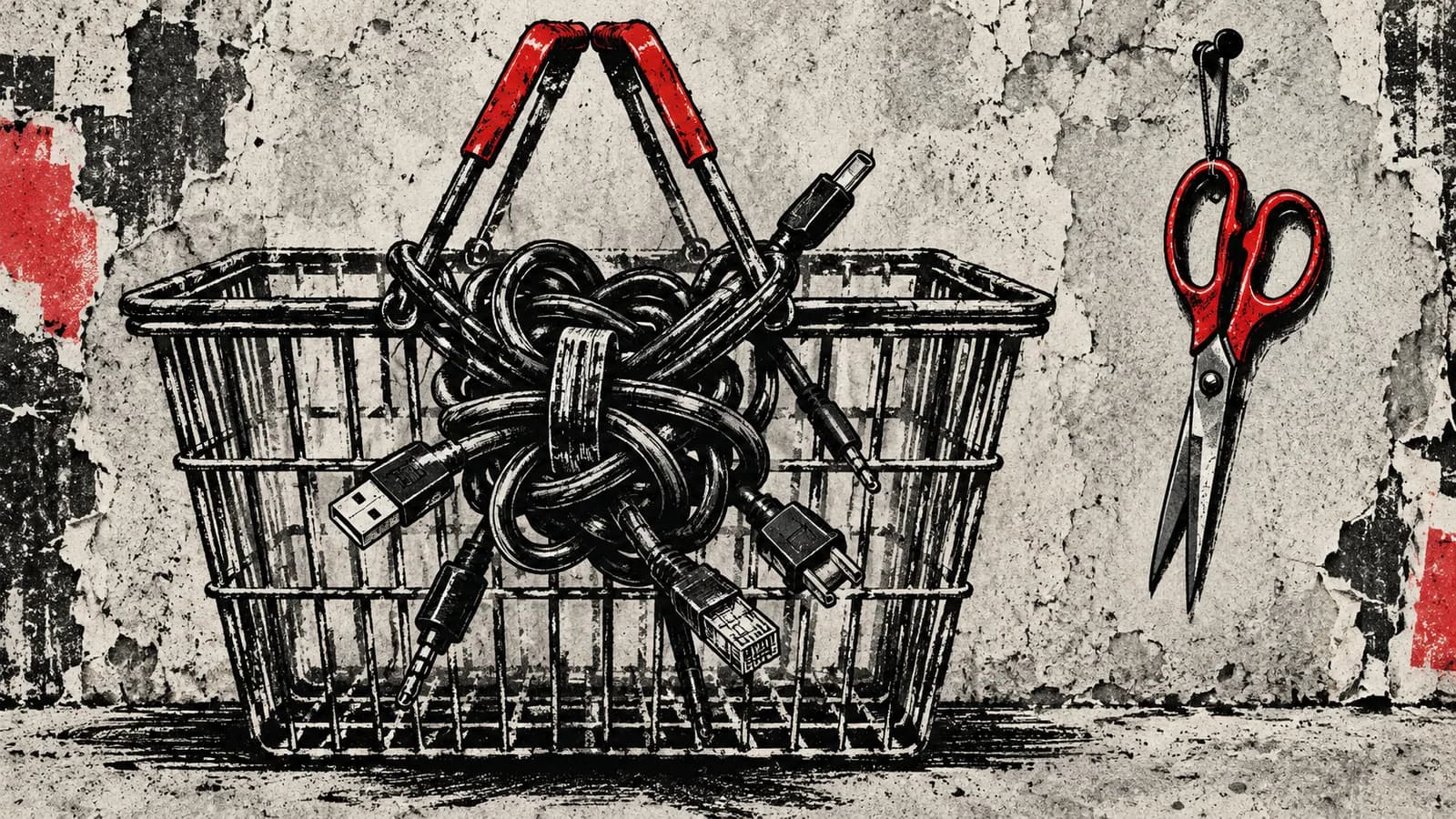
Some products have requirements that cannot fit on a price card. Configuration matters. Compatibility matters. The consequences of a bad choice may be substantial.
None of that explains why the customer must be qualified as a sales opportunity before receiving the information required to make the choice.
Complexity is real. The little tollbooth erected in front of it is optional.
The curtain is part of the performance
“It depends” can be the beginning of a useful explanation. It can also be where the seller puts the information it would prefer to discuss only after establishing a budget and a deadline. The customer cannot always tell which one they are getting. That uncertainty is convenient for exactly one side.
A real technical dependency does not make every commercial decision mysterious. Configuration can change cost without requiring a discovery pilgrimage before the buyer learns whether the offer is remotely appropriate. Yet complexity often expands to cover whatever the sales process wants kept private.
The resulting dependency gets described as care. The customer needs us. We guide them. Of course they need guidance: the map is locked in the sales office.
The demo discovers a familiar disease
A demonstration shows what the product can do. A diagnosis establishes what is wrong. When the same person controls both, the diagnosis has an extraordinary tendency to fit the demonstration.
Every strength becomes an urgent requirement. Every limitation becomes an edge case. By the end, the customer’s problem looks remarkably like the vendor’s feature list. What a fortunate coincidence for everyone with a quota.
Expertise outside the transaction can leave a customer with an answer the vendor dislikes. That is its value. It does not need to carry the buyer to the checkout to justify its existence.
Sophistication does not make me your captive
I am not impressed by how elaborate the purchase has become. I am interested in how much of that elaboration belongs to the thing being purchased, and how much belongs to the machinery around selling it.
The distinction gets blurred because the machinery has jobs, targets and a compelling need to continue. A buyer who can understand and act independently is inconvenient to that arrangement.
Complexity does not make the customer less entitled to control. It makes selling them a compulsory interpreter an even better business. That is the part I refuse to applaud.
Twenty years in marketing and design, across industries. Still paying attention. Considerably less patient.
More about me ↗