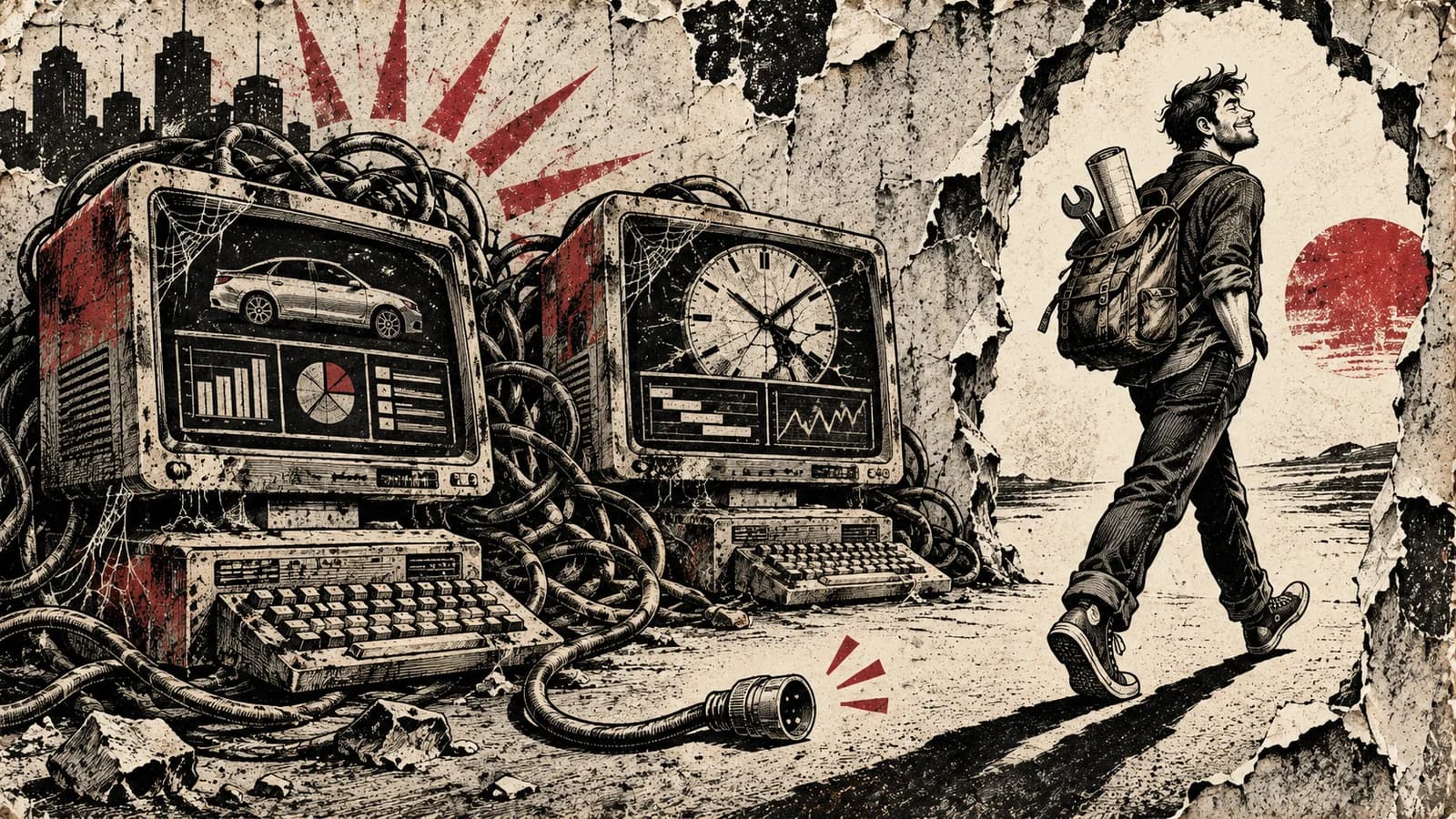
I walked away from NXTDeal and Chrono for the same reason: I no longer wanted to spend my time building another place for people to log in.
Both projects explored problems I know from doing the work. Both taught me an enormous amount. And both were becoming variations on a software model I increasingly expect people to move past.
I could see the next several years: more features, more integrations, more screens, more effort spent making a familiar category of software a little more coherent. I stopped wanting that to be my next several years.
So I ended my active development and opened the source. Someone with the time and interest can take it further. I am comfortable with that being the outcome.
Two projects, one familiar destination
NXTDeal came out of my automotive and marketing experience. A customer crosses sales, service, inventory and finance while each department somehow manages to behave as if they have just discovered the existence of the others. The project explored a shared dealership workspace that could connect those activities and make the next step clearer. Its release includes the backend, interface, administration work and a Chrono decision-support component. [1]
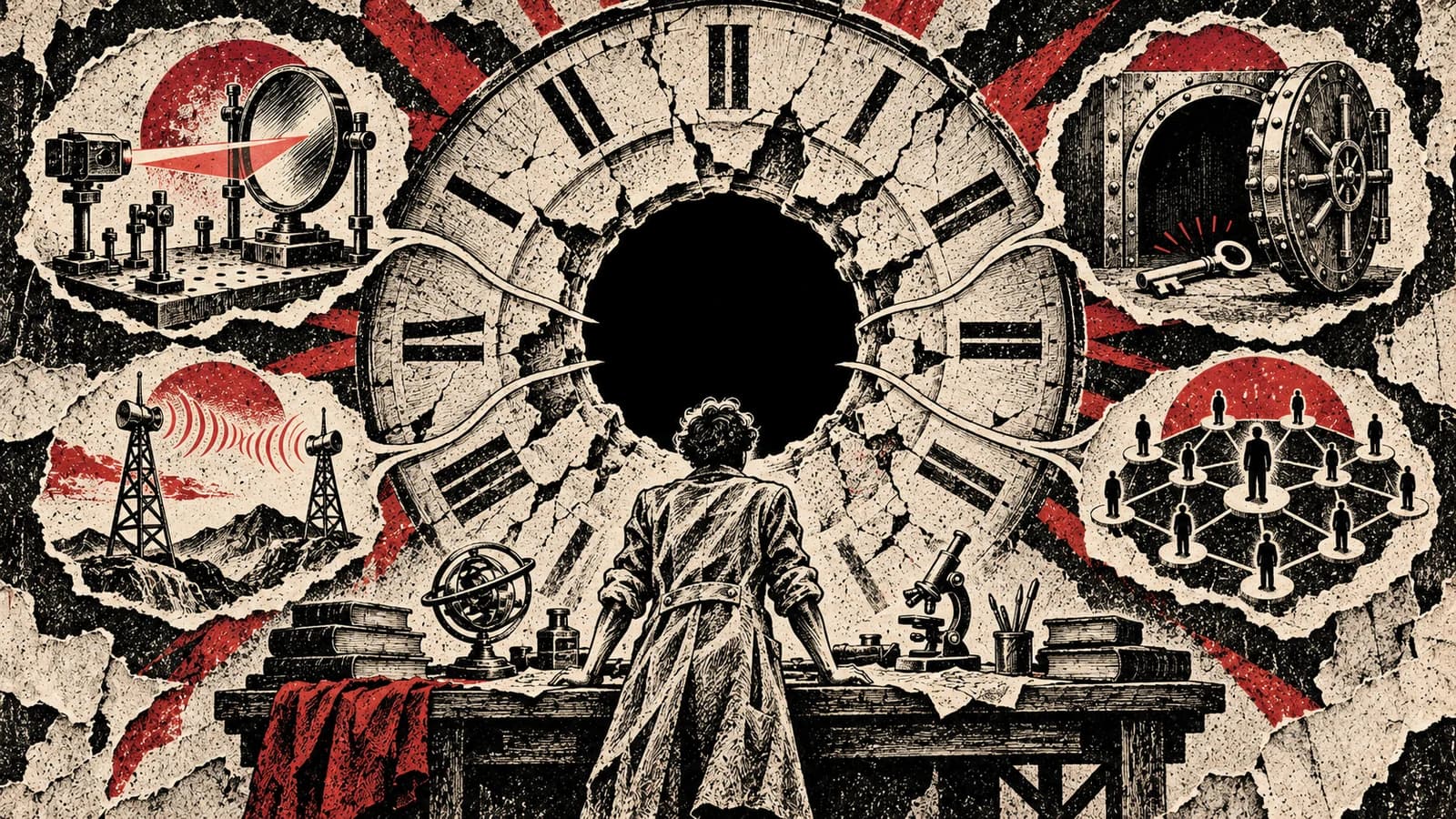
Chrono approached the problem through context. What did we know when we made a decision? Which assumptions changed? Where did the forecast come from, and what happened afterward? It grew into a temporal decision engine with planning and scenario analysis, an API, a browser workspace and a desktop application. [2]
Different starting points. Increasingly familiar destinations.
Customers, campaigns, content, sales, reporting. Each addition made sense on its own. Together, they became another environment people would have to learn, maintain and remember to use. Software already exists for these jobs in more combinations than anybody needs explained to them.
Better connections and better design can matter. But a real problem does not automatically make another platform the answer I want to spend my life building. I have watched enough impressive systems go unused to know that improving the interface does not magically improve the habits of the people behind it. Organizational dysfunction survives a redesign like a cockroach survives a kitchen renovation.
The work is moving beyond the hub
My bet is that most routine software work will become prompt driven. Describe what you need. Supply the context. Review the result. Make the decisions that require judgment. The tools should be able to reach the information and carry out the task without demanding that you live inside their navigation.
That makes the cloud work hub increasingly uninteresting to me. I think it is heading toward obsolescence as the center of the experience. The machinery underneath still matters: records, permissions, integrations, checks, a way to understand what happened. The requirement to open a particular dashboard and follow its map of the business is the part I expect to lose its importance.
I do not need to wait for every company to agree before deciding where to put my own time. Recreating software that already exists in some form started to feel like a dead end for me. I would be polishing an arrangement I expected people to need less of.
Chrono made that especially clear. The useful part was retaining context and making it accessible through different interfaces. NXTDeal brought the same question into a particular industry: how much of the platform was helping the work, and how much was asking the work to adapt to the platform?
Once I started questioning that premise, a longer feature list was a lousy answer.
The education was worth it
These projects made prompt engineering practical for me. An instruction had to survive contact with actual software. It needed enough context, specific constraints and a manageable scope. Then I had to check whether the implementation did what I asked instead of congratulating myself because something appeared on a screen.
Working across engines, interfaces and coding platforms gave me a much better understanding of development cycles. Breaking a large idea into changes, carrying context between environments, reviewing behavior and documenting a handoff became part of the work. The first version running was the beginning of a much longer conversation with the thing I was trying to build.
There is no magic sentence that replaces all of that. Anybody selling the version where you type an idea and a dependable business falls out the other end is selling a fucking bedtime story.
I also became less impressed by sheer size. A project can get bigger while the reason to keep building it gets smaller. A backlog will happily keep you occupied forever. It cannot decide whether the work still deserves your attention.
The brand concepts, interfaces and development work remain in my portfolio. [3] [4] I am proud of them. I am also glad I learned enough to recognize that I wanted to go somewhere else.
The code can have a future without owning mine
I released both projects so someone who wants to develop them properly has a starting point. They can study the work, use a component, change the direction or continue the broader idea under the published terms. I would rather allow that than leave everything locked away because I am done with it.
Chrono Engine's original source is MIT-licensed, with separate terms retained for dependencies and model weights. NXTDeal's original software and text documentation are also MIT-licensed; its media, fonts, artwork, logos and trademarks are excluded from that grant. The repositories explain those boundaries and the remaining development work. [1] [2]
This is a community handoff, not an announcement that a new maintainer has already taken over. Both releases are development work, with no promise of ongoing support or production readiness. Whoever continues them gets the code and the opportunity to make their own decisions.
I got what I needed from this chapter: a serious exploration, a much broader understanding of the tools and a clearer idea of what I want to work on. Continuing because I had already invested time would have been a terrible reason to invest more.
I do not owe two dashboards the rest of my life.
Sources & further reading
Twenty years in marketing and design, across industries. Still paying attention. Considerably less patient.
More about me ↗