Chrono
An evidence-first decision engine, explored through product design and AI-assisted development.
Active development concluded · Released for others to build on · October 2026
From an idea
to a working exploration.
Chrono began with a question: what would a business workspace look like if a decision kept its context? I explored the identity, interface and software behind a temporal decision engine, connecting past events, present evidence and possible futures. My development chapter is complete; the source is now on GitHub for others to study, run, fork and extend.
The problem
A dashboard can show a number without explaining what was known when a decision was made. Chrono explored keeping evidence, assumptions, corrections and outcomes connected over time, so people could revisit the reasoning behind a choice.
What took shape
The project grew into a Python engine with an API and CLI, a browser workspace and an Electron desktop workspace. Planning and scenario analysis sit alongside customer, campaign, content, sales and revenue work. Local models and an optional agent interface explore different ways to interact with the same underlying context.
Python · API & CLI · Browser workspace · Electron · Local model exploration
A visual language for the idea.
The identity concept uses lines converging on a bright point to suggest history meeting the present. A restrained monochrome palette, fine orbital lines and a quiet wordmark carry that idea into the workspace. The released SVG mark and icon are scalable renditions of the identity direction.


The work on screen.
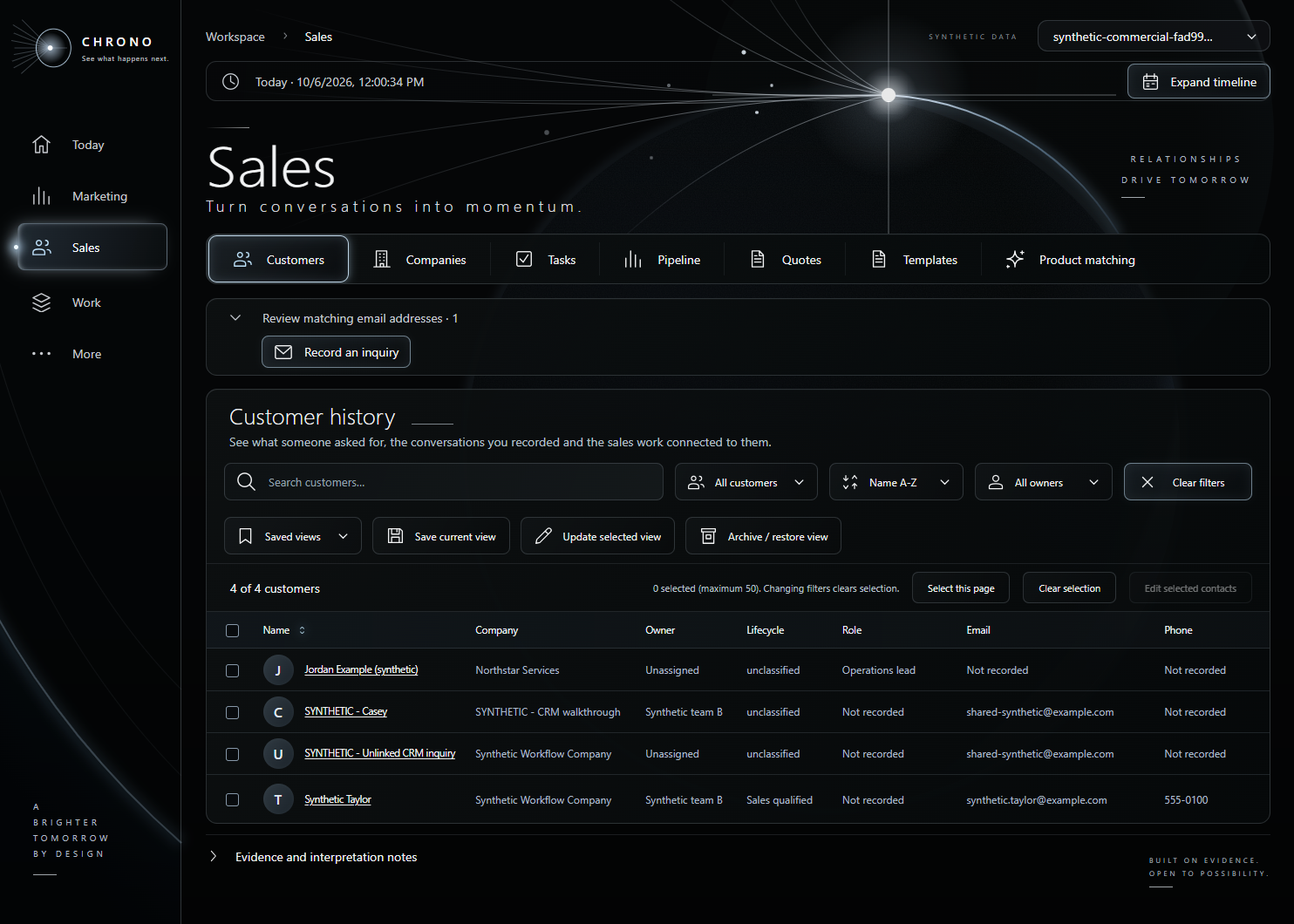
Sales workspace
Development interface capture, October 2026. The customer records are synthetic examples.
View full size ↗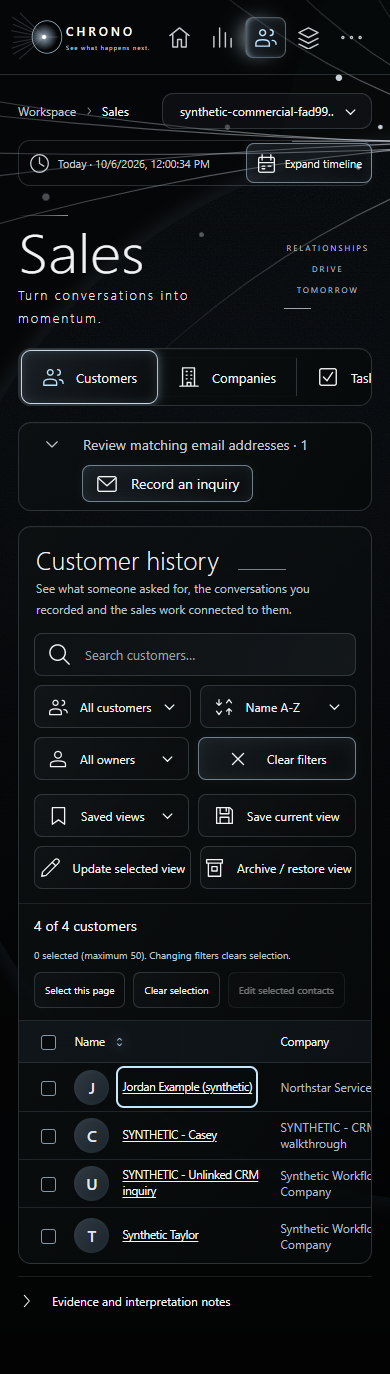
Mobile interface exploration
A retained mobile development capture showing how the workspace direction adapts to a smaller screen.
View full size ↗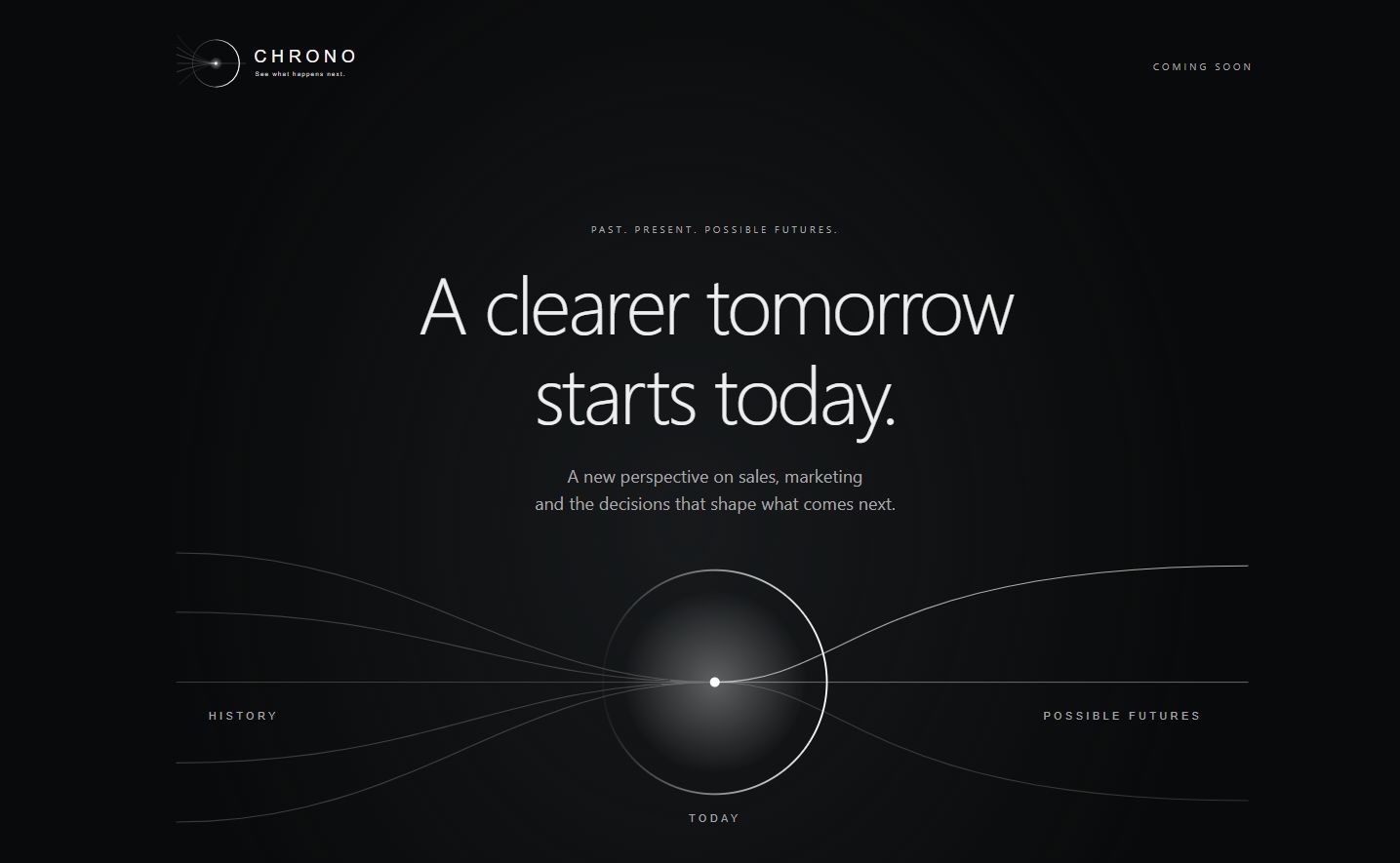
Early launch-page direction
Historical launch-page screenshot from October 2, 2026. The branching timeline is a concept illustration, not a forecast.
View full size ↗Beyond the first prompt.
Chrono made prompt engineering a practical discipline for me: describing the intended behavior, supplying useful context and constraints, then reviewing what the implementation actually did. Working through an engine, a browser experience and a desktop workspace deepened my understanding of development cycles and the differences between coding platforms.
Building, reviewing, repeating
These projects gave me a fuller understanding of how prompt engineering fits into development: defining the problem, breaking it into manageable changes, checking the result and refining the next instruction. That experience now informs how I approach marketing systems and creative workflows.
Take it from here.
My active development has ended. The community release includes source, synthetic examples, tests and architecture documentation. It is a development project, with no promise of ongoing support or production readiness.
The original source is released under the MIT License. Dependencies and model weights retain their own licenses.
Source, documentation & release notes ↗