I stopped developing NXTDeal because I stopped wanting to spend my time building another place for people to log in.
That is the shortest version. The longer one matters, because I still like the idea. I know the problems it was meant to address. Automotive departments can spend an astonishing amount of time passing the same customer around while behaving as if they have never met. Sales knows one thing. Service knows another. Marketing is apparently supposed to divine the rest from a spreadsheet somebody last opened during the Obama administration.
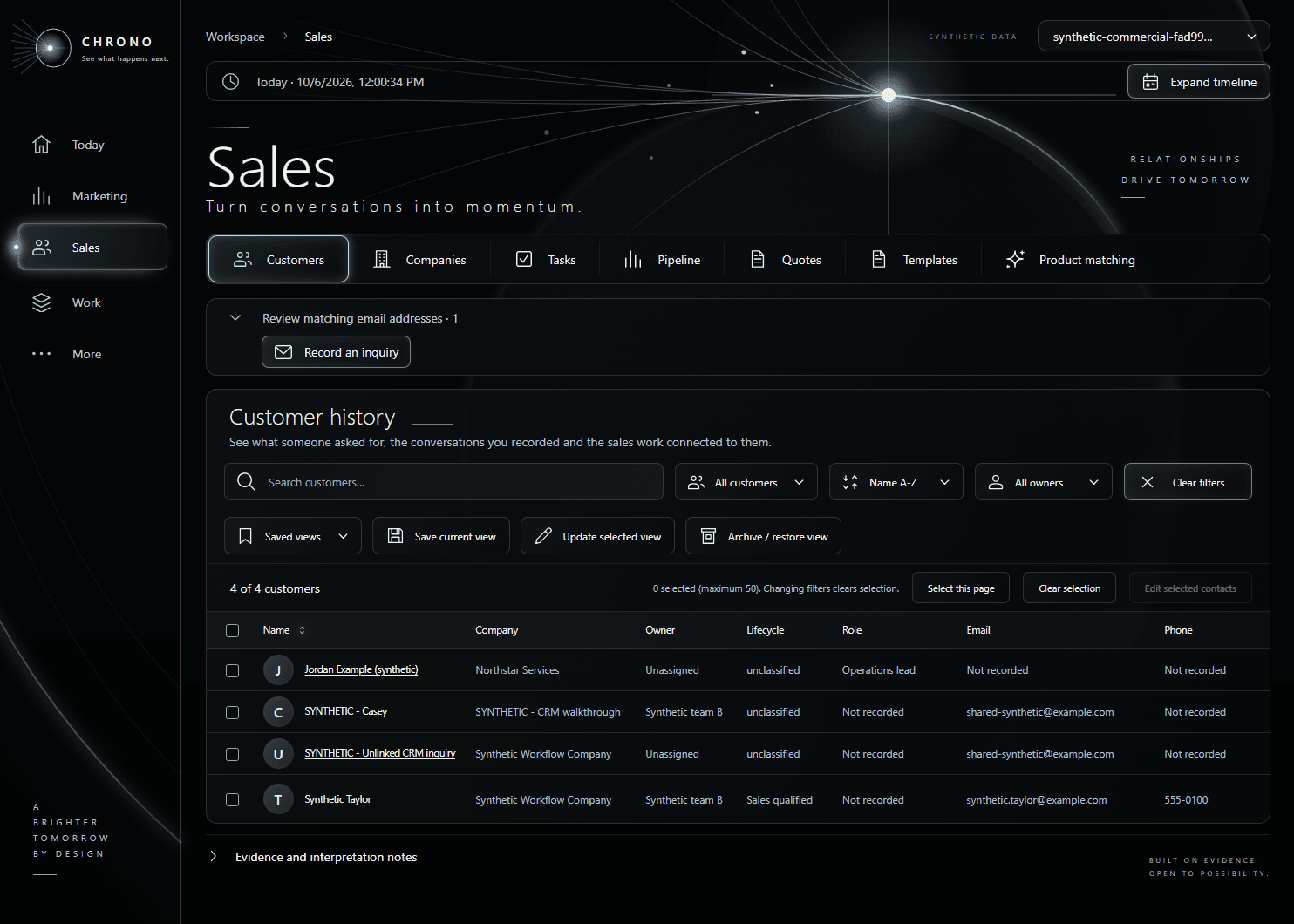
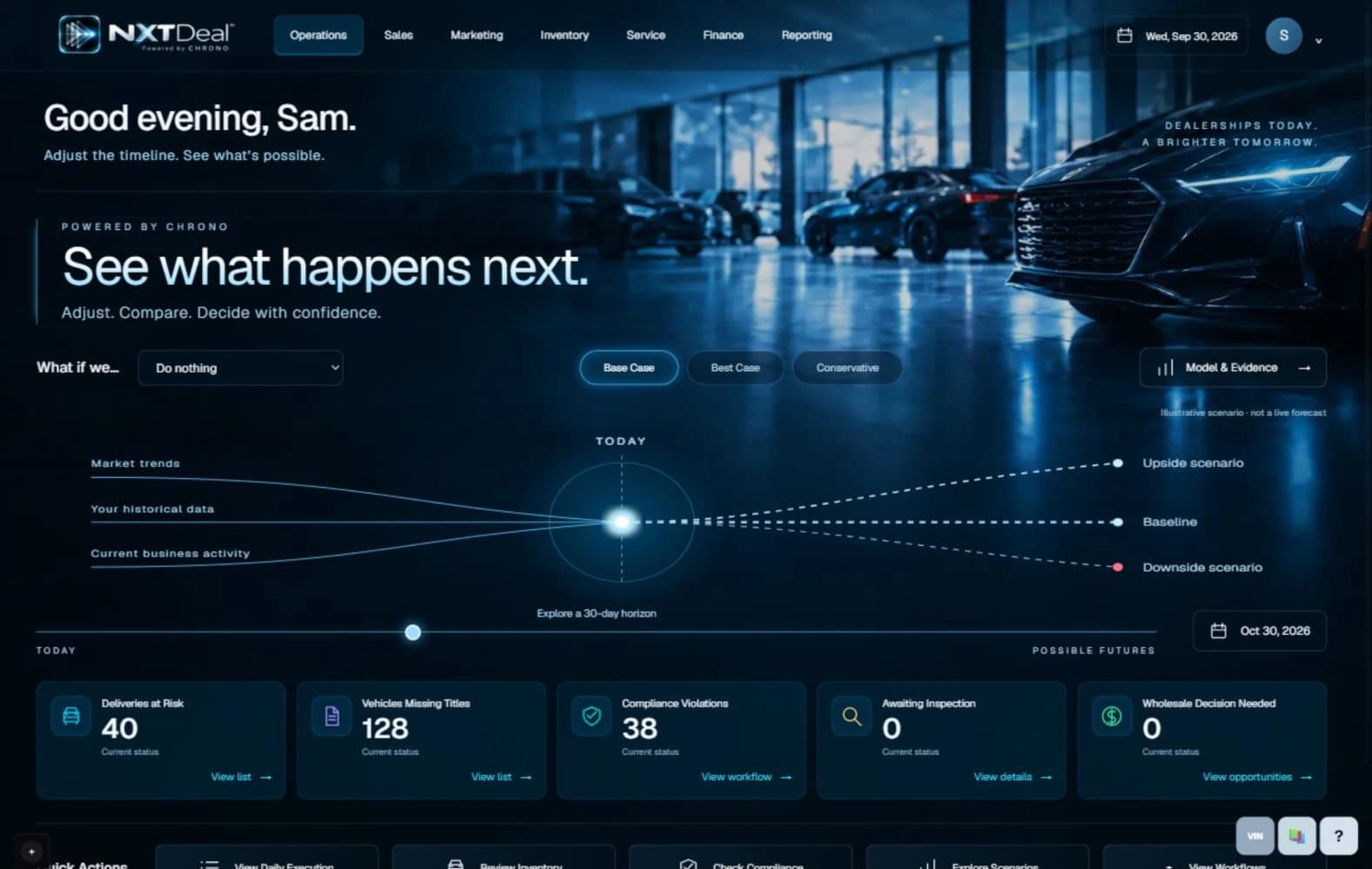
NXTDeal was my attempt to connect that work. A shared dealership workspace, with context across departments and a clearer sense of what should happen next. The public project includes the interface, backend, administration work and a Chrono decision-support component. It is substantial, unfinished software. [1]
I could see how to keep adding to it. I became less convinced that I wanted to.
A better dashboard was becoming the wrong ambition
There is an enormous difference between a problem being real and another software platform being the answer I want to build.
Dealership software already exists in more forms than anybody needs explained to them. Better connections, better design and less obnoxious workflows can still matter. But I could spend years refining those things and remain inside essentially the same arrangement: put the work in a platform, teach everyone where it lives, then hope they use it properly.
I have spent enough of my career watching that last part fall apart. An impressive system can become another thing people avoid. The interface gets better. The organizational habits survive like cockroaches in a freshly renovated kitchen.
At some point, I had to ask whether I was solving the problem or designing a much nicer address for it.
I expect the work to move past the workspace
My bet is that most routine software work will become prompt driven. People will describe what they need, review what comes back and intervene where judgment matters. The expectation will be that the tools can reach the relevant information and carry out the task. Having to visit a particular hub and work through its departmental map will feel increasingly like unnecessary ceremony.
I am not predicting that databases disappear or that every business can safely hand its operations to a chat box tomorrow. Someone still has to build the machinery, permissions and checks underneath. What I think is becoming obsolete is the cloud work hub as the destination around which everybody must organize their day.
A customer should not need to understand a dealership's internal org chart. Increasingly, I do not think the person helping that customer should have to spend their day navigating a software version of it either.
That changed what I wanted to spend my time on. Recreating a familiar software category, even with ideas I liked, started to feel like a dead end for me. I was optimizing an arrangement I expected people to need less of.
The useful part came with me
NXTDeal was worth exploring. Building it pushed me well beyond the pleasant part where a product is an attractive screen and a good explanation.
I learned what prompt engineering actually demands when the result has to become software: sufficient context, specific constraints, smaller tasks and an ability to notice when the implementation has wandered away from the intention. I learned more about development cycles and what changes between coding platforms. I had to think about interfaces, behavior, integration and the handoff as parts of the same job.
There is no magic sentence that replaces that work. There is a lot of describing, checking, correcting and trying again. Anybody selling the version where you type an idea and a dependable business falls out the other end is selling a fucking bedtime story.
Those lessons remain useful even after I decide the product is no longer mine to finish.
Someone else can take it further
I opened the source because someone with the time and interest to develop NXTDeal properly may see a path they want to pursue. They can study it, change it, use parts of it or take the software in a direction I would never have chosen. The original software and text documentation are MIT-licensed; the repository separately explains the exclusions for artwork, media, fonts and trademarks. [1]
That is a handoff, not a promise that a new maintainer has already arrived. The release describes its incomplete features and remaining validation work. I am not presenting an unfinished project as a supported commercial service.
The design and screenshots remain in my portfolio. [2] I am proud of the exploration and comfortable with where my part ends. Continuing because I had already invested time would have been a terrible reason to spend more of it.
I do not owe a dashboard the rest of my life.
Sources & further reading
Twenty years in marketing and design, across industries. Still paying attention. Considerably less patient.
More about me ↗