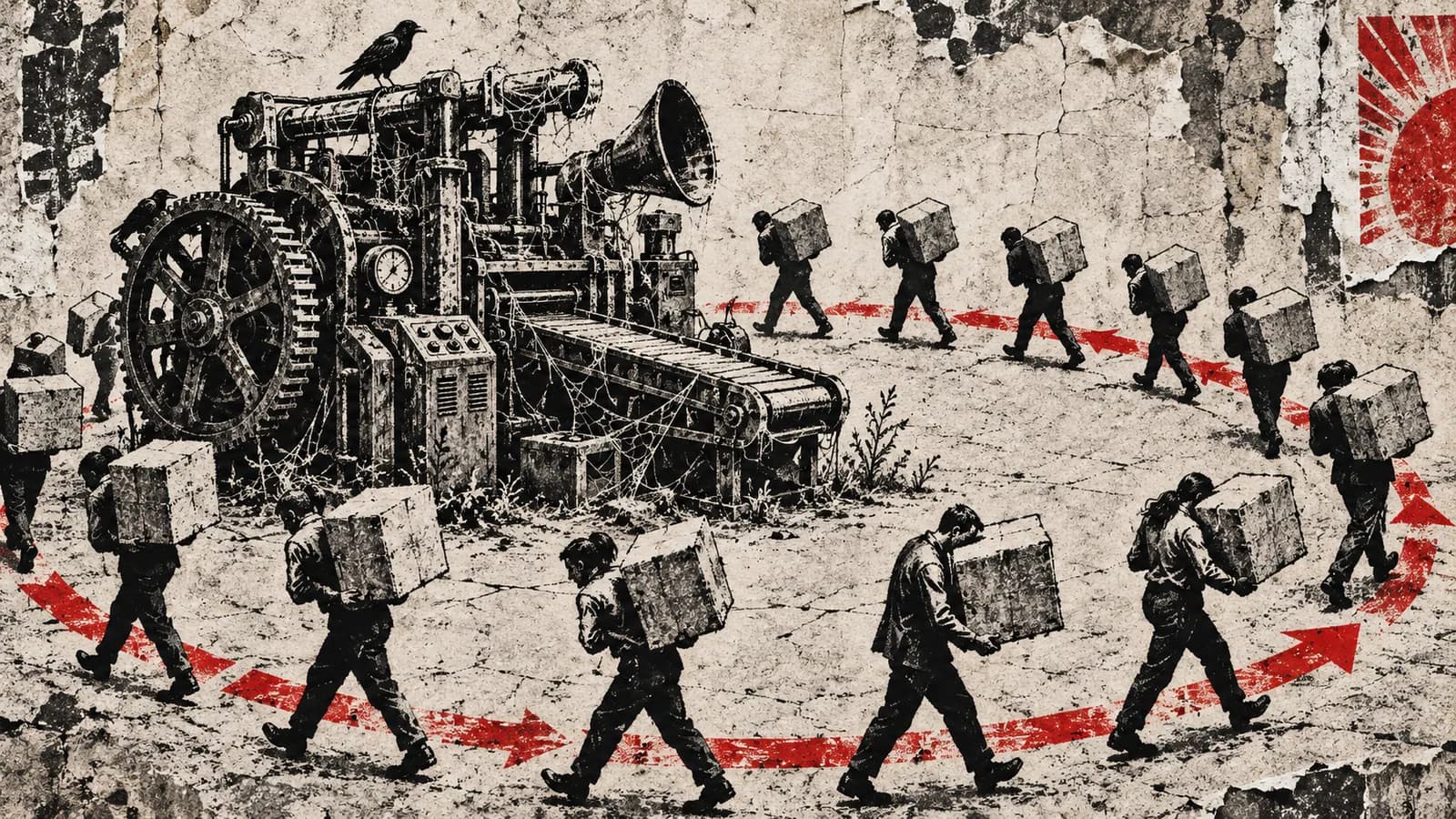
A person asks a specific question. The campaign replies with a general introduction. They book a meeting. The next message asks them to book a meeting. They say the timing is wrong. The sequence announces that now is the perfect time.
Nothing says “we understand your needs” like a machine demonstrating that nobody has read them.
This is the same problem behind my earlier piece about static follow-up. The schedule becomes more important than the conversation. The business calls that consistency. The recipient calls it the reason they stopped replying.
Persistence looks better from the sender’s chair
Day one, day three, day seven. A tidy progression on a planning screen. From the other side, it can be the same unanswered question interrupted by three increasingly familiar messages from someone who apparently cannot remember the last exchange.
The absurdity is that all this activity can be reported as work completed. Every automation fired. Every touch happened. The system performed flawlessly as a mechanism for making the company look inattentive.
I am tired of the word relationship being used to describe something with no apparent capacity to listen. A sequence that continues regardless of the response has more in common with a car alarm. At least the car alarm eventually embarrasses its owner.
The metric rewards the noise
Messages sent are easy to count. The moment a person decides never to deal with the company is harder. So the reporting favors the side of the interaction that the business can see, and the irritation remains conveniently outside the chart.
That does not make every reminder unwanted. It makes the assumption that more contact equals more progress look as lazy as it is. The process can be busy while the relationship deteriorates. Marketing professionals have been explaining that distinction for years, generally to a room asking whether we could increase the frequency.
At some point the refusal to understand becomes the subject. The company wants a customer-centered process without surrendering its right to keep talking.
No is not a missing step
The customer may have decided. They may have bought elsewhere. They may simply want the business to stop taking up space. None of those answers owes the sender another opportunity to reinterpret it.
Automation makes the refusal to accept that cheaper to repeat. It does not make it more sophisticated. The message can contain my name, reference a category and arrive at a carefully selected hour. If it ignores what I already said, the personalization is just a costume.
We did not invent a relationship engine. We gave the person who will not take a hint an unlimited texting plan.
Twenty years in marketing and design, across industries. Still paying attention. Considerably less patient.
More about me ↗