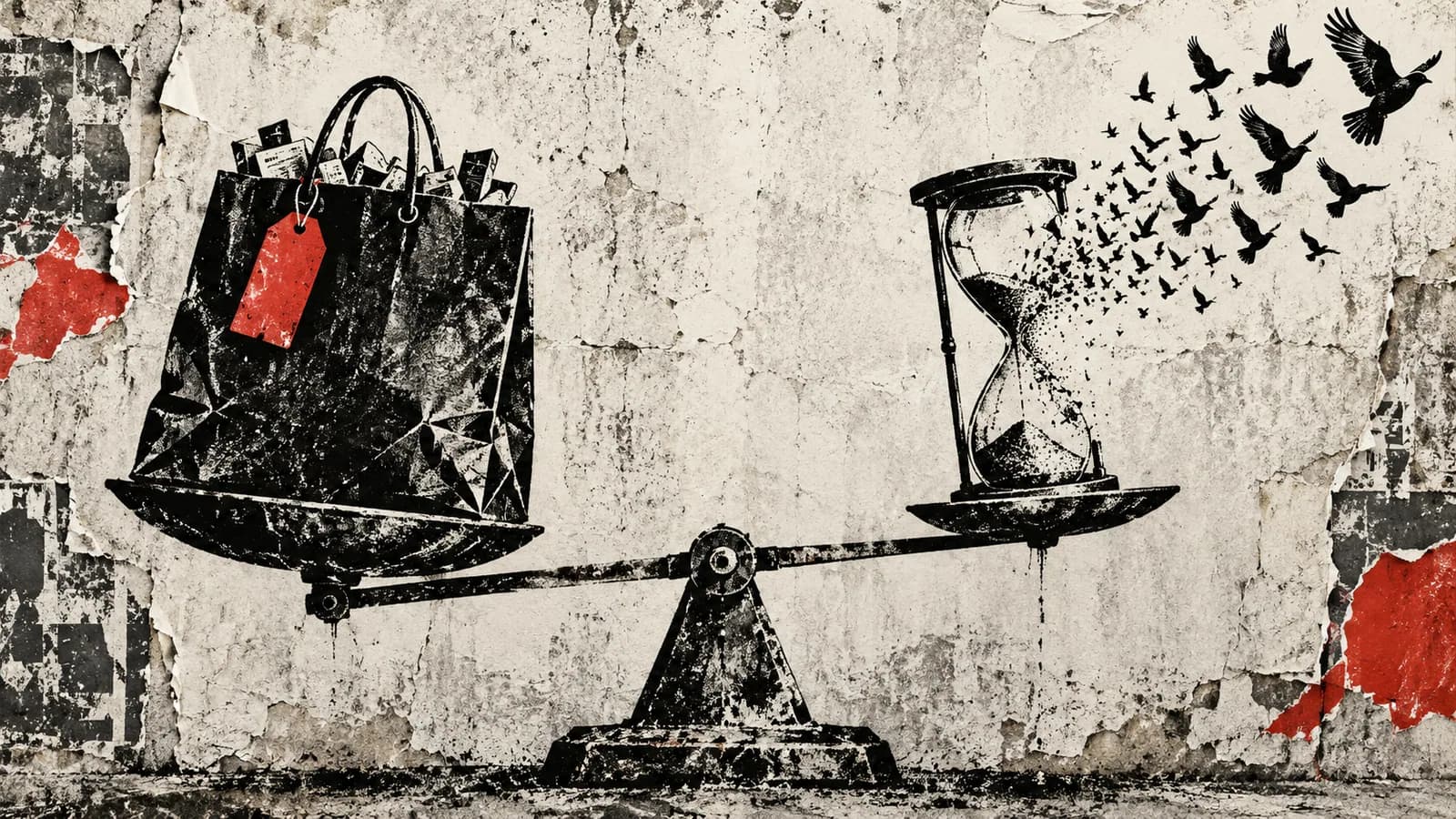
The lowest price is not always the best deal for me. Apparently this remains shocking to businesses that calculate customer value using money while treating the customer’s time as an unlimited natural resource.
I use Amazon when I need to buy something and Walmart when I need it quickly. Convenience is part of the price I am willing to pay.
If a purchase costs a little more but keeps an unwanted sales process out of my way, that difference may be money well spent.
The full cost is personal
I count the effort of finding information, understanding the terms, completing the transaction and resolving a problem. I also count how much attention the process demands from me.
Two offers can be close in price and very different in those respects. A business may view the extra steps as relationship-building. I may view them as work I am being asked to perform for the privilege of becoming a customer.
There is no universal conversion rate between a dollar and an hour of irritation. Different buyers will value them differently. A buying process that recognizes that variation is more respectful than one that assumes its preferred ritual benefits everyone.
Control is a benefit
My streaming habits make the same point. Netflix, HBO and Disney+ can add up to an expensive collection of subscriptions. I still value deciding what to watch, where and when, and I have no intention of going back to cable.
That does not mean I endorse every price increase, interface decision or restriction. It means the control matters enough that the old arrangement is not attractive to me merely because somebody can describe its economic advantages.
People can criticize a service and still prefer its underlying model. The alternative has to compete with the freedom they would lose, not just the bill they might reduce.
My time is not a rounding error
The business can calculate the cost of its employee’s time down to the minute. My time, apparently, arrives free with the inquiry. It can be spent on calls, demonstrations, waiting and reassurance without ever becoming part of the price comparison.
Then I choose a more convenient option and get told I could have saved money. Yes. And the company could have stopped requiring a second unpaid job before I was allowed to give it some.
This is why the argument about streaming misses me when it ends at the total bill. I know subscriptions add up. I also know what I get to decide for myself. The freedom is part of what I am paying for. Recreating the cable bill does not automatically recreate my willingness to accept cable’s arrangement.
People who work in marketing should recognize the absurdity of telling a customer that the benefit they value is not the real benefit. Yet convenience is still dismissed as laziness whenever it competes with a model built around customer effort.
My afternoon is not a resource the seller owns. A transaction that gives it back can be worth more to me than a theoretical saving I have to fight for. I do not need a lesson in value. I have already assigned one.
Twenty years in marketing and design, across industries. Still paying attention. Considerably less patient.
More about me ↗